Transparency
You don’t have to believe us. You can check.
WhatTheChain does not ask to be believed. These pages show why the platform arrives at a result, and who pays it for what.
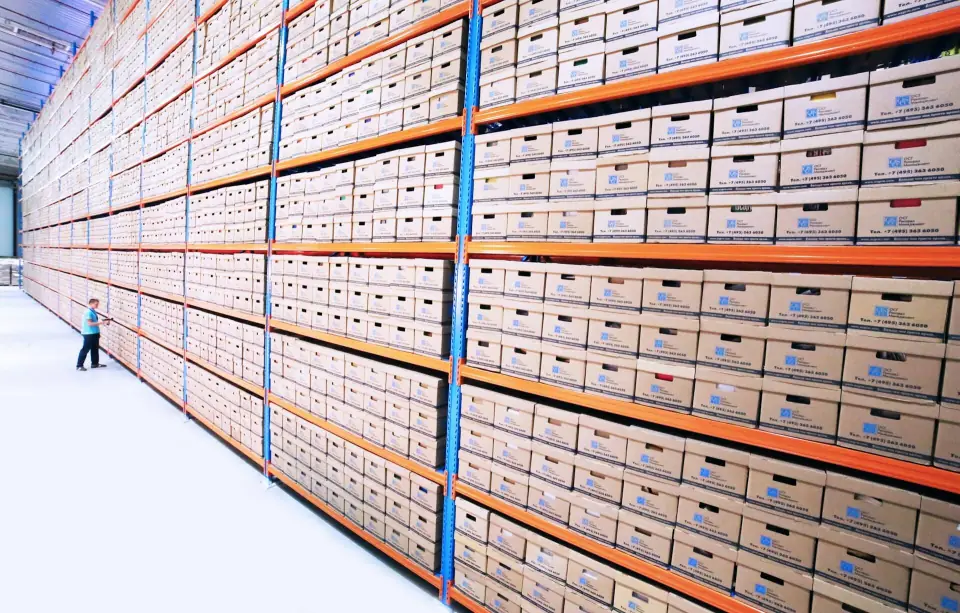
Photo: Nana Smirnova (Unsplash License)
Revenue firewall
The rule is public and not negotiable: commercial relationships never affect what WhatTheChain writes, rates or ranks.
Eight rules apply to every source of revenue. They belong in the conflict-of-interest register, the definition of done and the wording guide.
The reference is free.
Ratings, methodology, profiles, library, glossary, incidents and country guides are reachable without login or payment.
No payer sees anything in advance.
No rating, change or study result is shown to anyone who pays before it is published.
Prices are score-independent and public.
What a licence or service costs does not depend on a rating, and the price list is published.
Every commercial relationship is in the register,
with date, type and tier. Rated parties that are also customers are marked as such.
Separation of personnel.
Editorial and the rating committee on one side, sales on the other. The bias review checks customers against non-customers once a year.
No revenue from visibility.
Nothing a provider pays changes the position, presentation, completeness or timeliness of its profile.
Concentration limits.
No customer above 10 %, no revenue pillar above 40 % of annual revenue. Deviations are justified in the annual report.
Wording also applies to customers.
Licence agreements bind licensees to the wording guide: a value is shown as “rated by WhatTheChain”, never as advice.
Conflict-of-interest register
Who has a relationship with WhatTheChain
Every affiliate relationship, sponsor, licensee and funder, and the team’s own holdings in covered assets, with dates.
No entries yet
Funding
Where the money comes from
Revenue by pillar, against the concentration limits of rule 7.
Not yet reported, not zero. Revenue figures come from the commerce ledger, which opens with the first commercial offer. Until then each share is shown as a dash.
- –Largest revenue pillar · limit 40 %Not yet reported
- –Largest single customer · limit 10 %Not yet reported
Source register
Every series has an owner
Macro data from primary sources only. Exports and the API release only series whose licence allows redistribution.
| Source | Licence | Redistributable | Series |
|---|---|---|---|
| Presidencia de la Nación (InfoLEG) | CC-BY-4.0: argentina.gob.ar licenses all its contents under Creative Commons Attribution 4.0 International unless stated otherwise (https://www.argentina.gob.ar/terminos-y-condiciones). | Yes | 0 |
| Presidencia de la Nación (InfoLEG) | CC-BY-4.0: argentina.gob.ar licenses all its contents under Creative Commons Attribution 4.0 International unless stated otherwise (https://www.argentina.gob.ar/terminos-y-condiciones). | Yes | 0 |
| Bitcoin Improvement Proposals (bitcoin/bips repository) | BSD-2-Clause (as stated in the document: "This BIP is licensed under the 2-clause BSD license.") | Yes | 0 |
| Bank for International Settlements (BIS) | BIS terms of permitted use of BIS statistics (https://www.bis.org/terms_statistics.htm): use is unrestricted provided the BIS is cited as the source, translations are marked as not official, the use does not imply BIS endorsement, and inclusion in a commercial product does not add charges to its users. | Yes | 4 |
| Bank for International Settlements (BIS) | BIS terms of permitted use of BIS statistics (https://www.bis.org/terms_statistics.htm): use is unrestricted provided the BIS is cited as the source, translations are marked as not official, the use does not imply BIS endorsement, and inclusion in a commercial product does not add charges to its users. | Yes | 3 |
| Bitcoin Core | TODO(to be provided by the client) | No | 0 |
| Bitcoin.org | TODO(to be provided by the client) | No | 0 |
| Bitcoin.org | TODO(to be provided by the client) | No | 0 |
Bias reviews
A reviewer with the opposite standpoint
Before each major content release and each method version, a reviewer from banking, central banking or consumer protection checks where the library favours one side.
No bias review published yet
Open data
Signed releases under an open licence
Ratings, method, incidents and country data as versioned bundles. Each release is signed, so anyone can check that a file is the one that was published.
| Version | Date | Signing key |
|---|---|---|
| method-v1.2.0 | 356272D8EAB9D7BC |
Annual report · 2026 so far
The year in counts
Counted from the changelog and the registers, as of 22 Oct 2026.
- Signed releases
- 1
- Rating changes, each with its reason
- 0
- Corrections after a dispute
- 0
- Incidents added to the database
- 9
- Disputes received
- 0
- Reassessments opened
- 0
- Sources in the register
- 118
- Method versions in use
- 1
Signing key
Every reference release is signed with minisign. The platform verifies each signature, recomputes every number and only then publishes a release. You can check the same signature yourself.
- Key ID
- 356272D8EAB9D7BC
- Public key
RWS817nq2HJiNaDMNQ8bnVs6x/3ttSAe2JOI952ZNdR3gJhghjZoduf8
Verify a release
Download bundle.json and bundle.json.minisig of a release into one folder and run:
minisign -Vm bundle.json -P RWS817nq2HJiNaDMNQ8bnVs6x/3ttSAe2JOI952ZNdR3gJhghjZoduf8minisign prints “Signature and comment signature verified” and the trusted comment, which names the release tag.
To compare the checksums, run this in the same folder with SHA256SUMS.txt:
sha256sum -c SHA256SUMS.txtCredential issuer keys
Exam credentials are signed with these keys and their batches are anchored on Bitcoin from these addresses. Anyone can check a credential file against them.
DID document /.well-known/did.jsonIssuer profile /credentials/issuer.json
| Key | Type | Public key (Multikey) | Valid from | Valid until | Revoked |
|---|---|---|---|---|---|
| key-production-1 | Ed25519 | z6Mkpzkxi3yxfU2qpA3L7rBwmX4mL5i9PCta54zqsATbW5ZG | Open | No |
No issuing address is published yet.