Kontext · Makro-Linse, Thesen, Regulierungs- und CBDC-Beobachtung
Was bewegt diesen Markt, und wie sieht das größere Bild aus?
Kryptomärkte bewegen sich nicht im luftleeren Raum. Diese Säule zeigt die Gesamtwirtschaft als Zeitreihen aus Primärquellen und die verbreiteten Erzählungen darüber als Thesen mit ihren Gegenthesen, nie als Urteil.
Mit einer Frage beginnen
Nur Primärquellen. Jedes Diagramm aus Rohdaten gezeichnet, jeder Wert mit Quelle und Stichtag.
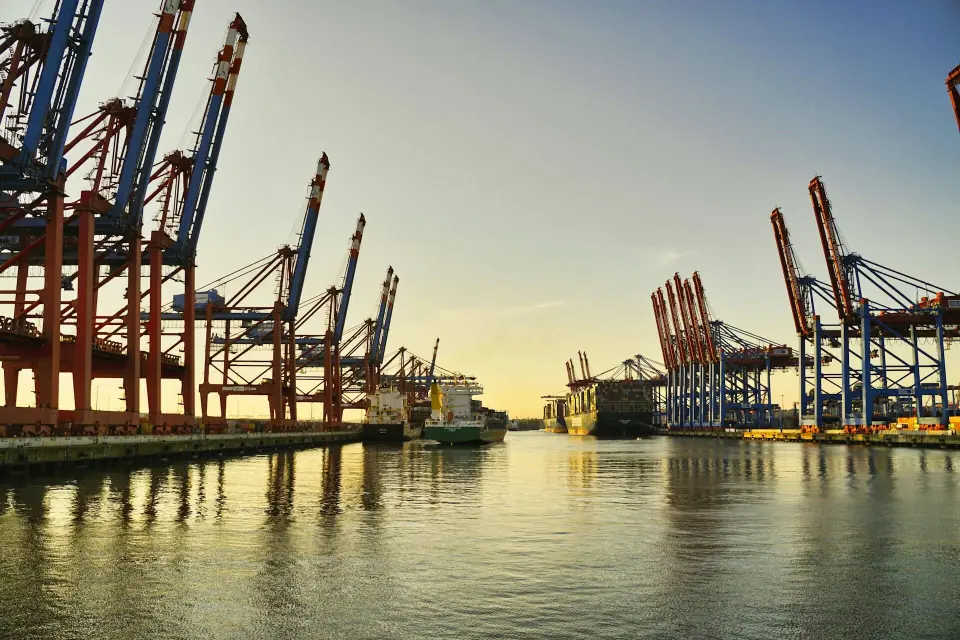
Foto: Foto K. (Unsplash License)
Die drei Kräfte
Zinsen, Liquidität und Regulierung prägen diesen Markt so stark wie jede Technik.
Die Makro-Linse deckt drei Kräfte ab. Jede hat ihre Erklärstücke, ihre Zeitreihen und ihre offenen Fragen.
i
Zinsen
Wie ein Leitzins bei Anleiherenditen und beim Diskontsatz jedes riskanten Vermögenswerts ankommt, und warum der reale Zins, nach Inflation, neben dem nominalen steht.
MiCA und ihre Übergangsfristen, die Travel Rule, Bargeldobergrenzen und der digitale Euro. Die Übersicht zeigt die datierten Meilensteine; die Dossiers enthalten die Details.
Regulierungsdossiers mit datiertem Änderungsprotokoll
Die Größe von Staatsschulden, Zinsen und Geldmenge als Zähler. Hier laufen sie nicht: Jeder Wert ist der letzte amtliche Wert mit seinem Stichtag. Der Geldzähler rechnet sie hoch, mit der Methode neben jedem Zähler.
14.438.113.700.000 €StaatsschuldenEurostat, Quarterly government debt (general government gross debt)Stichtag 30. Juni 2026Amtlicher Wert
302.607.000.000 €ZinslastEurostat, Government revenue, expenditure and main aggregates (interest payable, D.41)Stichtag 31. Dez. 2025Amtlicher Wert
17.646.463.000.000 €Geldmenge M3European Central Bank, Monetary aggregates M1, M2 and M3, euro area (balance sheet items statistics)Stichtag 31. Aug. 2026Amtlicher Wert
40,74 %Kaufkraftverlust des Euro seit 2002Eurostat, HICP, monthly index and annual rate (all items), euro area and GermanyStichtag 30. Sept. 2026Amtlicher Wert
19.969.815,63 BTCBitcoin-MengeRegeln des Bitcoin-ProtokollsStichtag 31. Dez. 2025Amtlicher Wert
Noch keine DatenGefördertes Gold
Thesen · das Format
Verbreitete Makro-Erzählungen sind Thesen, keine Tatsachen.
Jede These wird denen zugeschrieben, die sie vertreten. WhatTheChain übernimmt sie nicht; die Daten dafür und dagegen stehen nebeneinander.
1Was die These behauptet, und wer sie vertritt
2Der Mechanismus, den sie annimmt
3Die Belege, die sie stützen
4Die Belege und Gegenthesen, die ihr widersprechen
5Was die Sicht ändern würde, und was daraus für die Eigenschaften der betroffenen Anlagen folgt
Decree 1570/2001 of 1 December 2001 prohibited cash withdrawals above ARS 250 or USD 250 per week per account holder at each financial institution, and prohibited transfers abroad except for foreign trade, card spending abroad and certain debt payments authorised by the central bank. Taking more than USD 1,000 in foreign currency out of the country was allowed only through financial institutions. Deposits stayed in the accounts: transfers between accounts and institutions and payments by debit and credit card remained possible. Decree 214/2002 of 3 February 2002 converted foreign-currency deposits into pesos at ARS 1.40 per US dollar and foreign-currency debts to the financial system at ARS 1 per US dollar.
On 25 March 2013 the Eurogroup reached an agreement with the Cypriot authorities on an EU/IMF programme. Bank of Cyprus was recapitalised through a full bail-in of its shareholders and bondholders and the conversion of 47.5% of uninsured deposits (the part above EUR 100,000) into equity. Cyprus Popular Bank (Laiki) was resolved: its insured deposits moved to Bank of Cyprus, and its uninsured deposits stayed in a legacy unit, to be compensated from the liquidation of its assets. Deposits under EUR 100,000 were fully protected, and deposits of the central government and local authorities were exempt. Restrictive measures applied to cashing cheques, transfers abroad, domestic transfers above a set amount, cash withdrawals and exports, and opening accounts; payment card transactions and incoming payments from abroad were not restricted. The restrictive measures were abolished on 5 April 2015.
MtGox Co., Ltd., a bitcoin exchange in Tokyo, closed its site at noon on 25 February 2014 and applied for civil rehabilitation at the Tokyo District Court on 28 February 2014. It reported that approximately 750,000 bitcoins deposited by users and approximately 100,000 of its own had disappeared, and a cash discrepancy of approximately JPY 2.8 billion. On 7 March 2014 it found approximately 200,000 BTC in an old-format wallet, which reduced the estimate of disappeared bitcoin to approximately 650,000. The rehabilitation trustee began repayments in bitcoin and bitcoin cash from July 2024.
After the ECB kept emergency liquidity assistance to Greek banks at its level of 26 June 2015, Greek banks were closed for three weeks, from 29 June to 20 July 2015. Cash withdrawals were limited to EUR 60 per bank card per day, and transfers to foreign banks needed prior approval from a government body. Domestic payments by debit and credit card had no limit, and withdrawals with cards issued outside Greece were not limited. From 20 July 2015, withdrawals of up to EUR 420 per week were allowed. The controls were relaxed over time and lifted completely as of 1 September 2019.
A Government of India notification of 8 November 2016 withdrew the legal tender character of the existing ₹ 500 and ₹ 1000 banknotes with effect from midnight. Holders could have their value credited to bank accounts, or exchange them over the counter up to ₹ 4,000 per person, until 30 December 2016. Until 24 November 2016, cash withdrawals from bank accounts were limited to ₹ 10,000 per day and ₹ 20,000 per week; ATM withdrawals were limited to ₹ 2,000 per card per day until 18 November and ₹ 4,000 afterwards. The notification concerned the ₹ 500 and ₹ 1000 notes only; banknotes of other denominations remained legal tender.
Banks in Lebanon were closed from 18 to 31 October 2019 for retail and other transactions and reopened with informal capital controls; they closed again for 10 days from 9 November 2019. Banks set withdrawal ceilings of around USD 1,000 and LBP 2 million per week per account, with anecdotal evidence of lower ceilings on US dollars at many banks, and transfers of money out of the country were severely limited. The World Bank describes the controls as informal.
A public order emergency was declared throughout Canada on 14 February 2022. The Emergency Economic Measures Order, registered on 15 February 2022, required banks, credit unions, insurers, trust and loan companies, securities dealers, crowdfunding platforms and payment service providers to cease dealing in property of persons designated under it, including making funds or virtual currency available to them. Financial institutions froze at least 257 accounts, including bank and corporate accounts and credit cards, and 170 bitcoin wallet addresses were disclosed. The declaration was revoked on 23 February 2022.
On 8 August 2022 the U.S. Treasury's Office of Foreign Assets Control designated the virtual currency mixer Tornado Cash. The same day, Centre, the consortium behind the USDC stablecoin, blocked the related addresses, and Circle blocked them on its platform. The issuer's statement concerns USDC and names no frozen amount. Tornado Cash was removed from the sanctions list on 21 March 2025.
In early November 2022 customers of the FTX exchange withdrew their assets in large numbers. On 11 November 2022 FTX Trading Ltd. and affiliated companies filed for relief under chapter 11 in the United States Bankruptcy Court for the District of Delaware (case 22-11068), and customers filed claims for the value of the digital assets held by the debtors. On 12 November 2022 the Securities Commission of The Bahamas, under an order of the Supreme Court of The Bahamas, directed the transfer of all digital assets of FTX Digital Markets Ltd. to a wallet it controls. In December 2022 the U.S. Commodity Futures Trading Commission alleged in a complaint that the conduct of the defendants caused the loss of over USD 8 billion in FTX customer deposits.
Jedes Dossier gibt es in drei Tiefen und mit datiertem Änderungsprotokoll. Dies ist die Zeitleiste ihrer Meilensteine; die Details stehen in den Dossiers.
Makrodaten stammen aus Primärquellen wie EZB, Eurostat, Destatis, FRED, BIZ und Weltbank. Fremde Diagramme werden nie übernommen; jedes Diagramm ist aus Rohdaten in einem Stil gezeichnet.